I am not a Christian, but this morning I woke up thinking of God.
I began to wonder what it would fully mean to believe in God, to have absolute certainty of His existence. How differently would I live if I knew, with the same certainty that I know I am alive, that God is real? The more I wondered, the more puzzled I grew.
Consider the premise that God exists. If so, the only rational response would seem to be total devotion. Besides God, our worldly affairs – friends, family, work, pleasure and pain, even death – become incomparably small. If God created me, created everyone whom I love, created the world in which I live, and promises an eternal world beyond it, then what could there possibly be to do except live solely for God?
And why should I organize my life around temporary goods? Everything I accumulate here will disappear. Every dollar I earn will eventually mean nothing. Every pleasure and every misery will end. Every person I love will die, as will I. If there really is an eternal City of God beyond the cities of man, then it is difficult to understand why I should organize my life around this world rather than the other. A lifetime is trivial beside eternity.
And you shall love the Lord your God with all your heart and with all your soul and with all your strength. Deuteronomy 6:5, The Greatest Commandment
But this is not how contemporary Christians seem to live.
While they profess belief in God, they often appear to live much as if He did not exist. Rather than organizing life entirely around God, they seem to add God to a life already organized around everything else. They date, raise families, pursue careers, worry about money, watch TV, and go on vacations. God enters intermittently as a prayer before dinner, church on Sunday, perhaps a Bible verse before bed, invoked during moments of gratitude, guilt, and crisis, but otherwise strangely absent and pushed aside.
It is completely inverted. God should not be a part of life. Life should be a part of God. Life is but for God.
Rudolf Otto captures the feeling most precisely. Mysterium tremendum et fascinans. Mystery, terror, and fascination. To encounter God should be to encounter something wholly beyond the human scale, an overwhelming, inexorably alluring force that draws us ever closer toward Him. Yet modern Christianity seems particularly adept at removing all three. What remains is a therapeutic God who comforts and supports, forgives and reassures, who helps us through the life we have already chosen without seriously disrupting its path.
This is the great convenience of modern Christianity. It is almost effortless, because nearly every ordinary desire can be retold through a Christian lens, given a Christian name, and transformed into devotion. You spend Friday night with friends because friendship allows you to experience God’s love through others. You pursue a successful career so that you can provide for your family and exercise the talents God gave you. Leisure becomes Sabbath and ambition the cultivation of God-given gifts. You would never really need to surrender the life you always wanted.
But if finding God leaves me wanting the same lucrative career, the same beautiful woman, the same vacation destination, only now under a Christian reinterpretation, then what in me has actually been converted?
The church itself often reflects the same accommodating spirit. It can feel less like a place where people confront the Creator of existence and more like a social gathering beneath a sacred ceiling. There you meet friends, listen to music, hear a sermon, exchange pleasantries, and leave. But where is the intensity that belief in God should produce? Where is the terror, the awe, the sense that one has entered into the presence of something infinitely greater than oneself? Have we become afraid of that intensity, or have we simply forgotten it?
It is perhaps telling that a church with this intensity is fictional. Pius XIII in The Young Pope articulates precisely the implication that seems to follow from God’s existence. In his first homily, he demands:
You have to be closer to God than to each other… because everyone is alone before God… And he isn’t interested in us until we become interested in him exclusively… twenty-four hours a day, your hearts and minds filled only with God. There’s no room for anything else. No room for free will. No room for liberty. No room for emancipation.
As his name suggests, Pius takes piety to its ultimate conclusion. He gives form to what total devotion would actually require. Before God, nothing remains entirely one’s own. Your freedom belongs to God. Your love belongs to God. Even your Self belongs to God. Devotion to God cannot merely be one part of your life. It must consume the whole of it.
The modern Christian might object that God gave man free will, and the same Christian might also point to what God made: love, friendship, beauty, and work – all gifts from God. Why should devotion to God turn away from what He created?
But free will explains why I can turn away from God, not why I ought to. My ability to choose does not make every choice equally justified, and it certainly does not mean my life is therefore mine. If God created me, then even the will with which I assert my independence is something I did not create.
Nor does the goodness of creation resolve the problem. It is not that Christians enjoy these things, but that they become ends in themselves and only afterward are explained through God. And if their goodness alone is enough to justify loving them for their own sake, then God made it can sanctify almost anything, because God made everything.
If anyone comes to me and does not hate his own father and mother, wife and children, brothers and sisters — yes, and even his own life — he cannot be my disciple. Luke 14:25–26
And Jesus makes this point with a searing severity. He names father and mother, wife and children, even one’s own life, not because they are corrupt, but because they are among the deepest goods of human life, and therefore most capable of being loved in God’s place. Evil is not the only thing that competes with God. Good things also compete with God. No worldly good, however noble, can substitute for devotion, and at some point it must terminate not in what God has made, but in God alone.
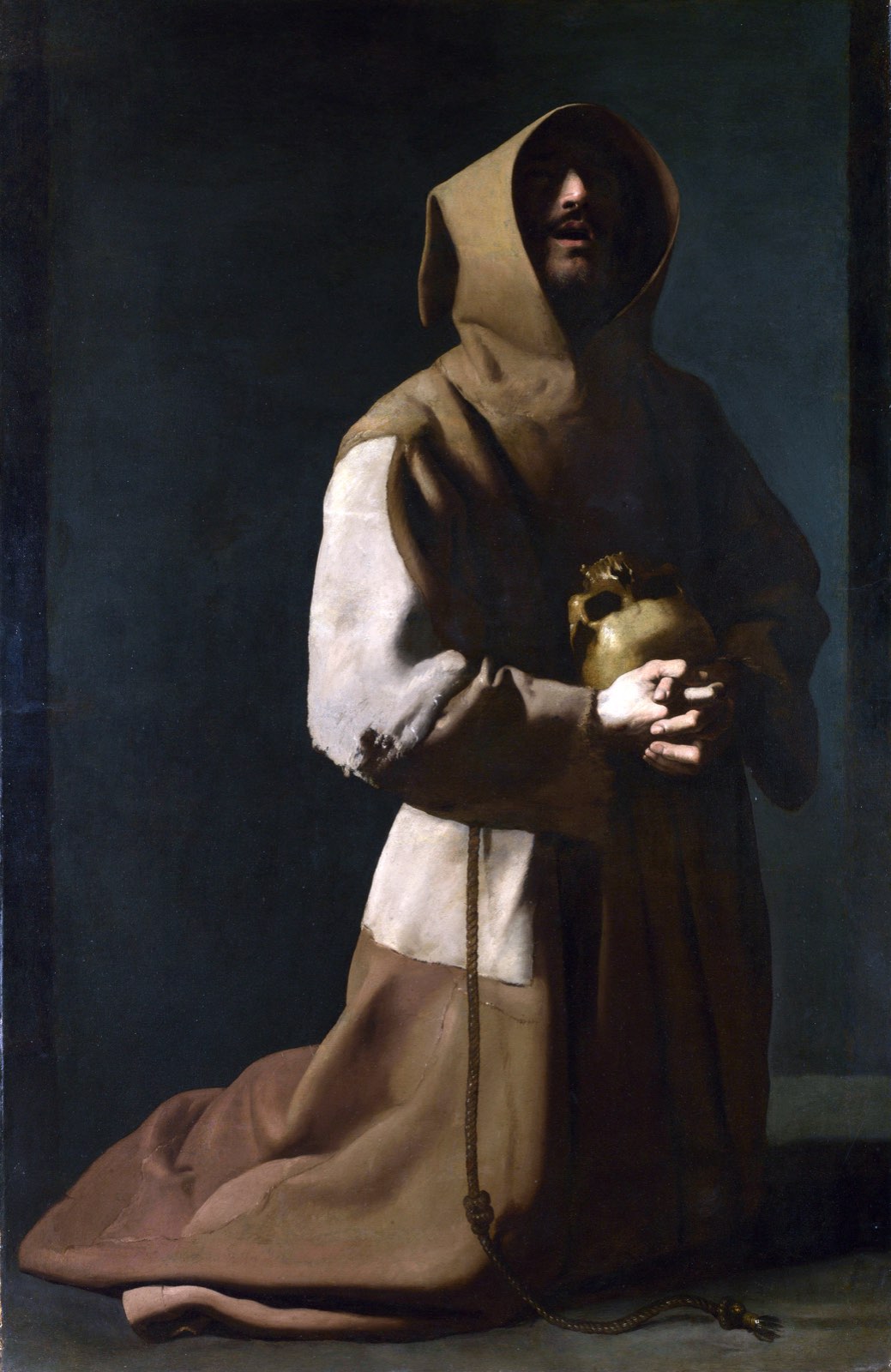
Seen through this lens, the monk who renounces property, sex, status, and comfort to devote his life almost entirely to God no longer appears strange. His life seems proportionate to what he claims to believe. But the ordinary Christian who professes belief in God, attends Sunday church, and then returns to a life whose daily routines would look identical had God never existed is incomprehensible. Do they truly believe what they profess? Has the enormity of God’s existence simply not sunk in?
Why should Christianity make the world more comfortable rather than more mysterious, overwhelming, and ineffable? If God is real, why should life remain at all ordinary?
I do not know whether God exists. But if He does, nothing short of everything is owed.